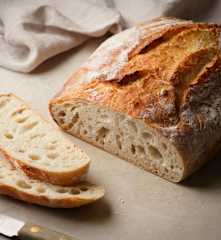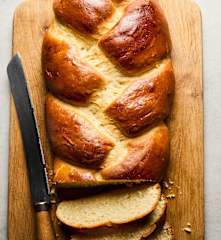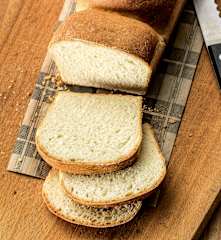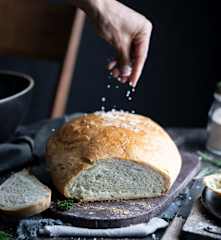
Why does good bread stay with us? Maybe it’s the sound of a crust gently cracking as it cools or the way a simple slice can bring people together around the table. Whatever the reason, bread has a way of feeling familiar, comforting and deeply connected to home.
Bread’s story begins over 14,000 years ago, when people mixed crushed wild grains with water and cooked them on hot stones, creating the first flatbreads. Over time, something magical happened, most famously in Ancient Egypt, when dough was left to rest and began to rise, transforming into something lighter, softer, and full of life. From there, bread travelled across continents and generations, shaped by the grains, climates, and traditions of each place it went, quietly becoming part of everyday life. And now, we’re rediscovering slower fermentation, whole grains, and the kind of patience that gives every loaf depth and character.
"When the crust crackles, footsteps follow. They always do.”
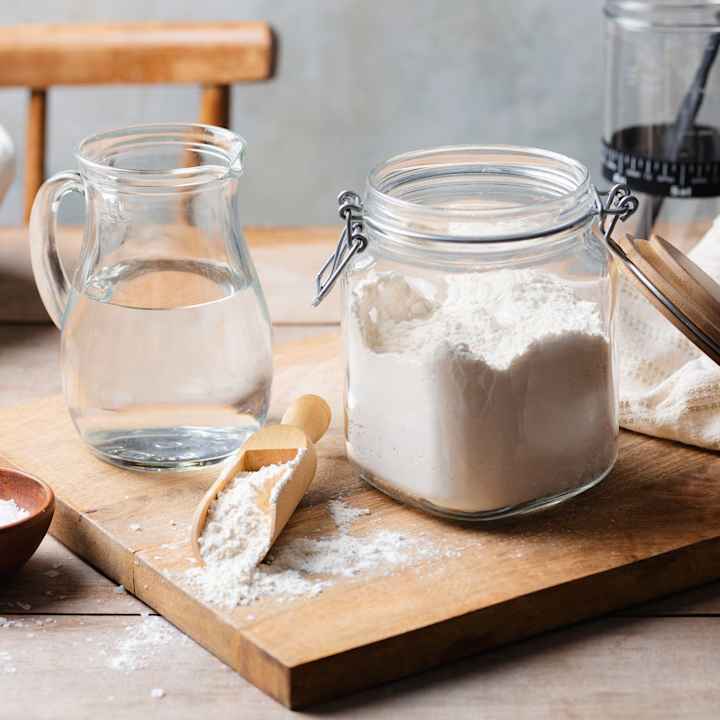
Bread isn’t just a recipe; it is often at the centre of everyday moments. At its heart are just a few ingredients: flour, water, salt… and time. Good bread isn’t about complexity but attention. It rewards patience, observation and care. The aroma will tell you when it’s ready to share.
When given time to develop, bread becomes more than the sum of its ingredients. A simple loaf can create a reason to gather, share a meal, and enjoy a conversation.
Strong versus weak:
• Strong wheat flour (11–13%+ protein): absorbs more water, creates elastic doughs, and is ideal for loaves, baguettes and rolls. In the UK and Ireland, this includes strong white bread flour and strong wholemeal bread flour.
• Weak flour (8–10% protein): produces softer, more delicate bakes. In the UK and Ireland, this is the protein level you would find in plain flour.
Rye versus wheat:
• Rye: naturally sticky, benefits from mixing and resting rather than intensive kneading, and works particularly well with sourdough; shaping is often easier with a dough scraper.
• Wheat: develops a stable gluten network, can be asssesed using the membrane test, and benefits from fold cycles that build tension.
Windowpane test:
To check whether the gluten has developed enough:
Fold cycles:
A fold cycle strengthens gluten and improves dough structure by:
Storage
• Store in a dry, dark place at 18-24°C in airtight containers.
• Use wholegrain flours sooner or mill grain fresh when possible.
Water
Monitor final dough temperature:
• After kneading, wheat doughs should be below ~26°C and rye doughs ~30°C.
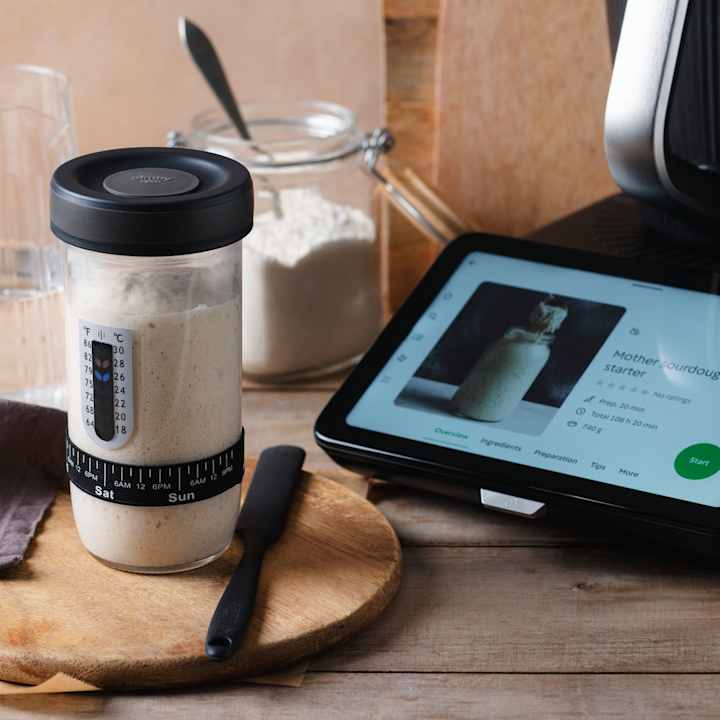
• For sourdough starters, use warm water (about 35-37°C); for final doughs, use cooler water to help control temperature.
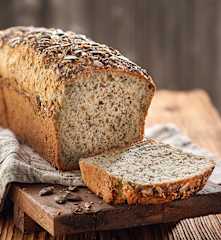
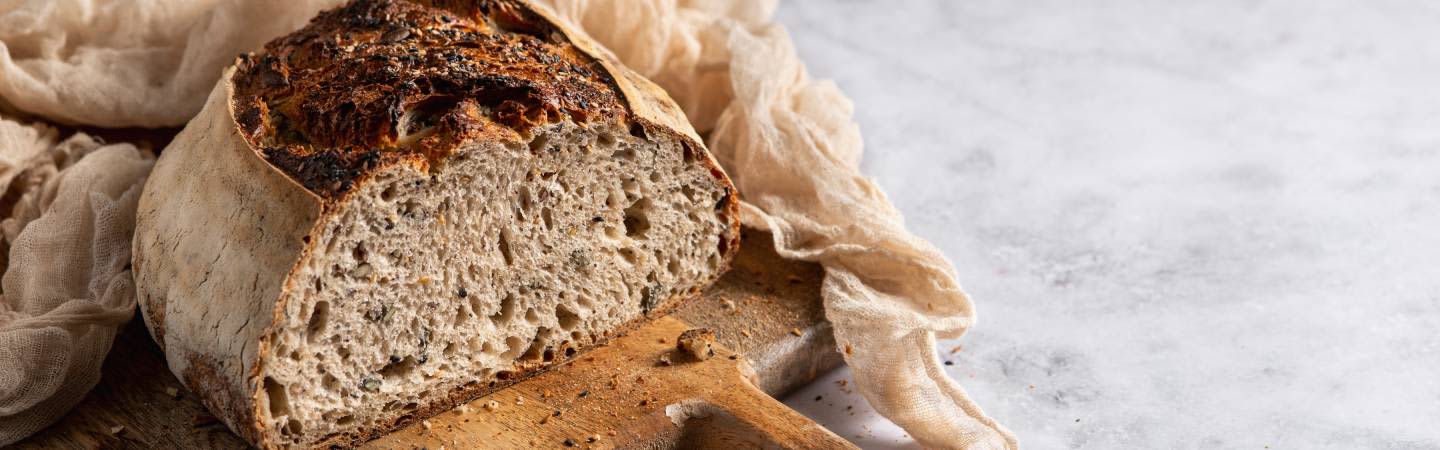
Take a moment to appreciate what makes good bread so satisfying. From the first mix to the final bake, time, temperature and technique all work together to develop flavour, texture and structure. As the dough rests and ferments, it slowly transforms, creating a loaf with a well-developed crumb and beautifully baked crust.
Breadmaking has been part of our kitchens for generations, with traditional methods now enjoying a well-deserved revival. And while the process takes time, it doesn’t need constant attention. Let the dough rest, give it time to rise and let the oven do the rest.
Mix, knead, prove, bake and enjoy.
Breadmaking has always been a balance of craft and consistency. Thermomix® supports the process by taking care of the precise tasks, from measuring and mixing to temperature control, giving you more freedom to focus on the dough itself and enjoy the journey from flour to loaf.
Thermomix® is your partner in the kitchen
• Built-in scale: precise measurement of flour, water, and salt, even in small quantities
• Precise temperature control: accurately warm water for sourdough and support the proving process with Fermentation mode
Knead or Mix:
• Soft wheat doughs: reverse/speed 4–5 for an even dough structure.
• Firmer doughs: Dough mode for strong gluten development.
• Rye doughs: mix gently rather than intensively knead, then allow to rest.
• Cleaning: Pre-clean mode makes cleaning simple.
So, take a slice of today’s loaf and listen as the crust cools. That quiet crackle is one of breadmaking's simplest pleasures. When you’re ready, there’s more to discover. Just beyond this page lies the transformation of four simple ingredients: flour, water, salt and time. It’s there that dough begins to come alive, and the kitchen, almost without you noticing, becomes a place of patience, creativity and shared moments.